
← All work Case study · Energy and infrastructure

Hydro-Québec

Since 2021, Appcom has been evolving HQ Hauban for Hydro-Québec: an Android app that measures guy wire tension from vibrations picked up by the phone, and guides crews through adjusting them. Guy wires are the cables that stabilize structures on the power grid.

Client in Quebec Energy and infrastructure Multi-platform ecosystem
At the heart of the product
Multi-device without a network Built-in sensors Guided adjustment Compliance validation Reports and exports Role management
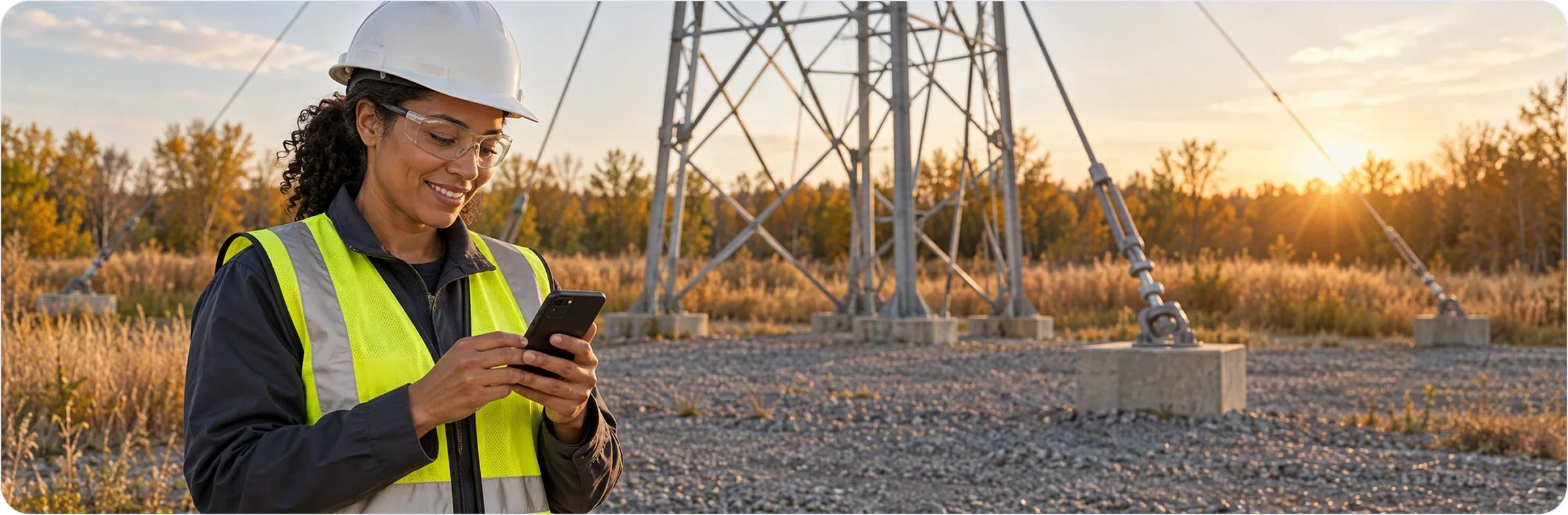
Technician in safety gear at the foot of a tower, phone in hand
Context

Precise measurement, far from everything.

Guy wires keep the grid's towers and structures stable. Their tension must meet precise minimum and optimal thresholds, and every job takes place in the field, often with no connectivity.

The constraint Turn demanding technical calculations into a clear workflow for technicians, have several devices communicate simultaneously, over long distances and without a network, and guarantee identical results between the field app and the analysis app.
An ecosystem

Multi-platform.

Android application Measurement and adjustment in the field, even offline.
Desktop application Analysis and follow-up after each job.
Map dashboard In the desktop app: lines and structures, color-coded by the action required.
Reports and exports In the desktop app: work, annual and verticality reports, with PDF, CSV and Excel exports.
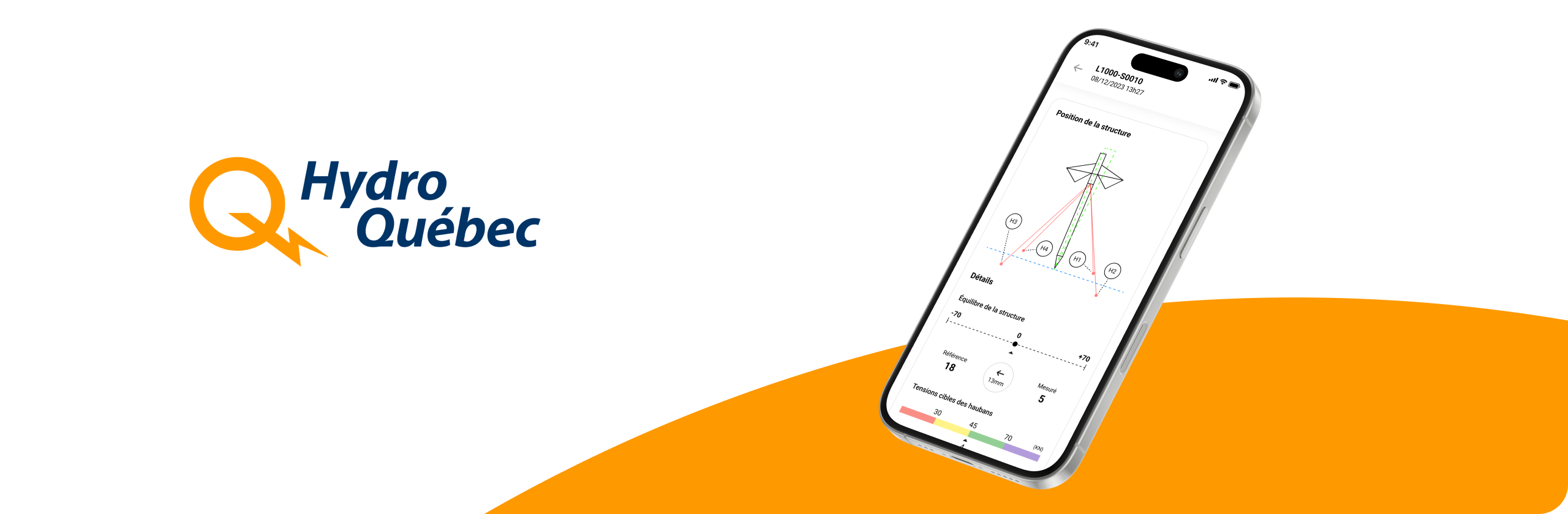
HQ Hauban: "Structure position" screen on a phone
Mandate

Guiding every adjustment, from the field to the report.

Appcom's challenge was to take over and evolve the Android app that calculates tension using the phone's accelerometer: automatically collect technical data, even offline, then sync it to feed Hydro-Québec's central systems.

The mandate evolved over four phases: from capturing measurements to analyzing structure verticality, through to a step-by-step guided tension adjustment workflow.
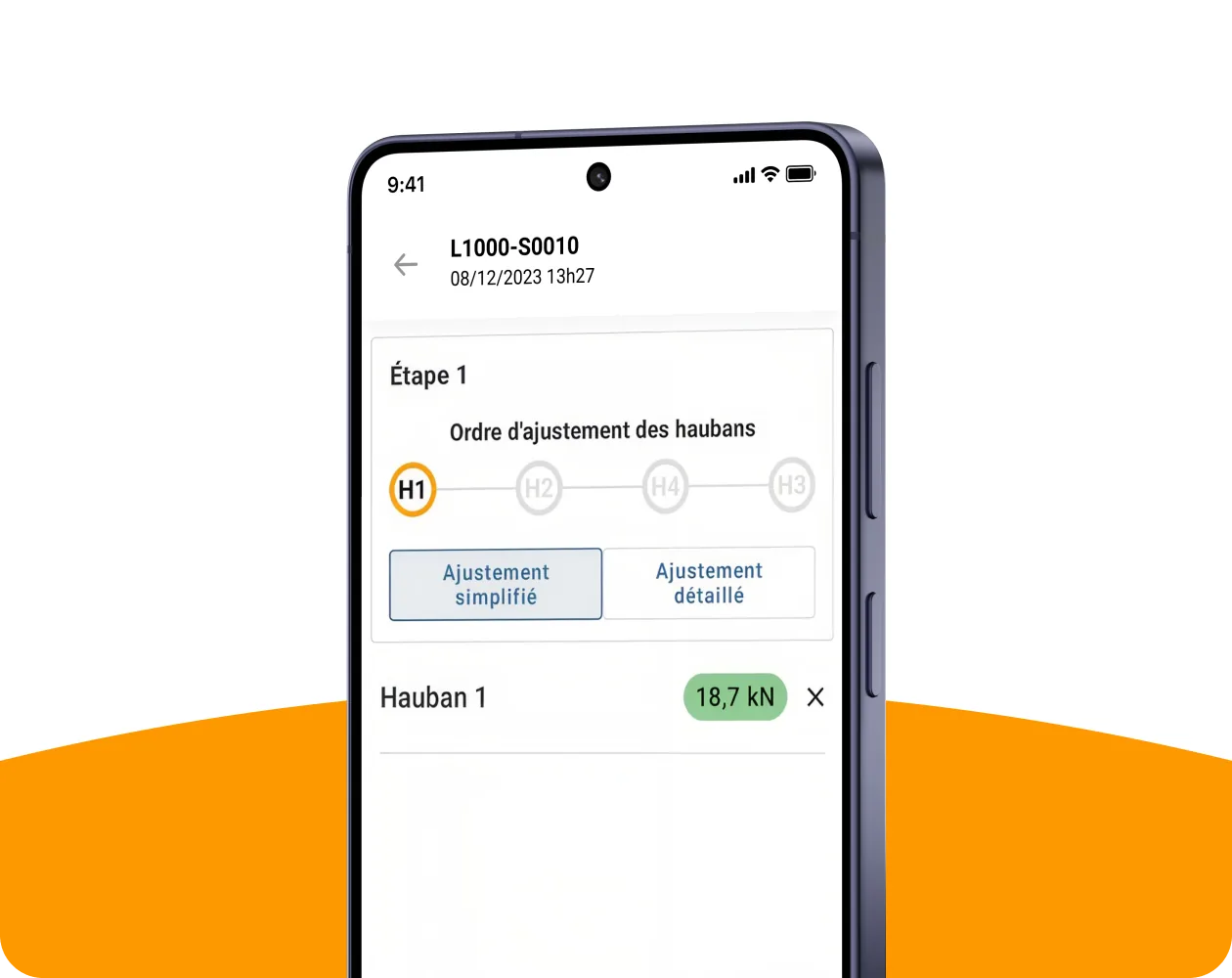
Mobile screen: guy wire adjustment order
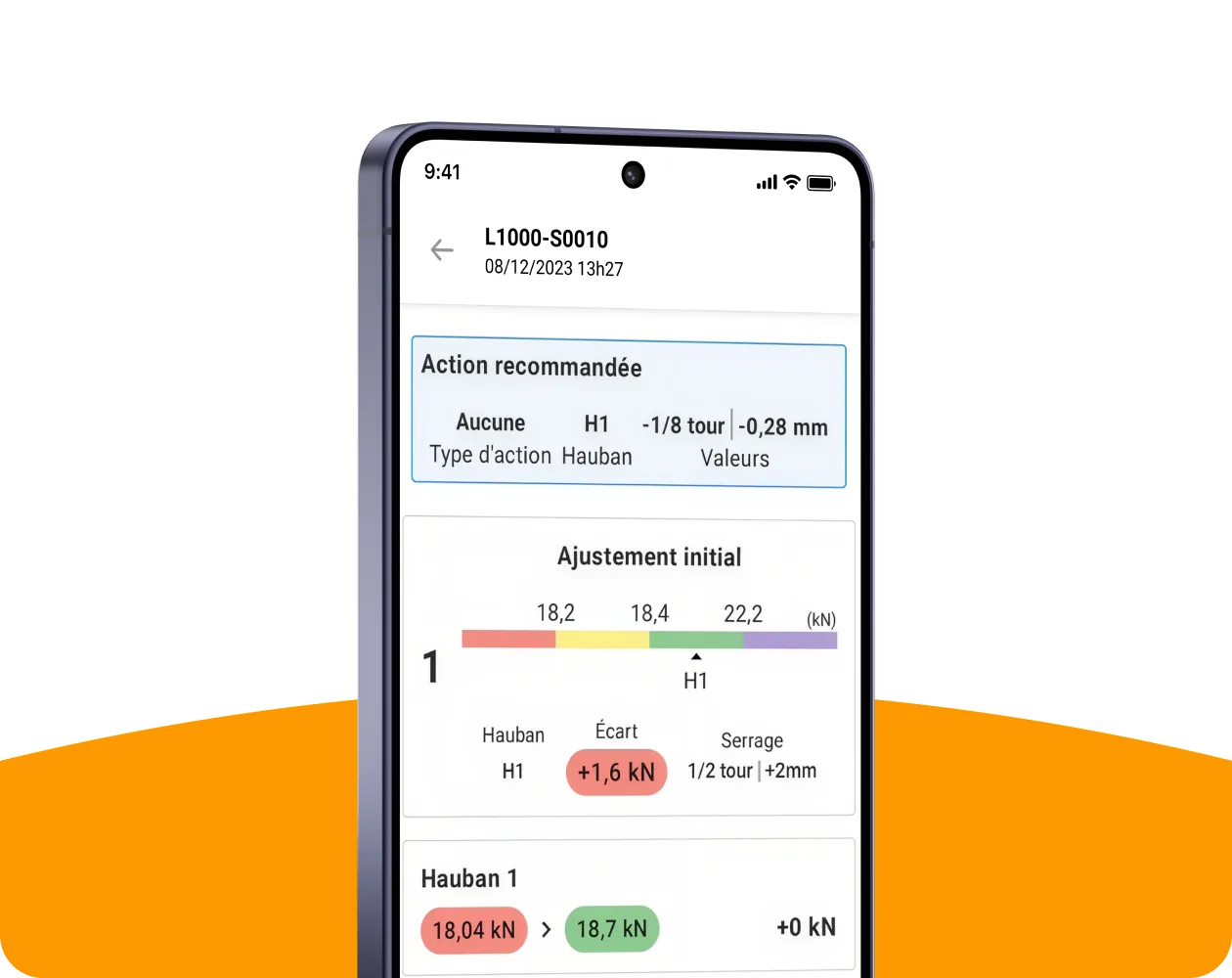
Mobile screen: recommended action and guy wire adjustment
What we did

An adjustment workflow, step by step.

In the field, one phone per guy wire sends its measurement to a master device, with no cellular network. The app analyzes the initial state of the guy wires, ranks them from weakest to strongest and recommends an adjustment order. The technician tightens or loosens the priority guy wire, takes a new measurement, and the app calculates the remaining gap and guides them until the system is balanced.

Back at the office, the desktop app imports field measurements and calculates tension using three methods, with the option to rerun one or more measurements. It keeps a history of adjustments, provides a map dashboard of lines and structures with KML import and export, and produces filterable reports along with PDF, CSV and Excel exports.
An interface that adapts to the number of available measurements, in full or simplified mode. Automatic compliance validation and an end-of-job report. Consistent data processing between mobile and desktop.
Technician using the app at the foot of a guyed tower
Impact and results

A field tool, built phase by phase.

A lasting relationship Since 2021, Hydro-Québec has renewed its trust in Appcom, phase after phase, to evolve HQ Hauban in step with its crews' needs.
Better-informed decisions Data collected in the field is synced to central systems and supports analysis and operational decision-making.

Other projects that make a difference.

All work →
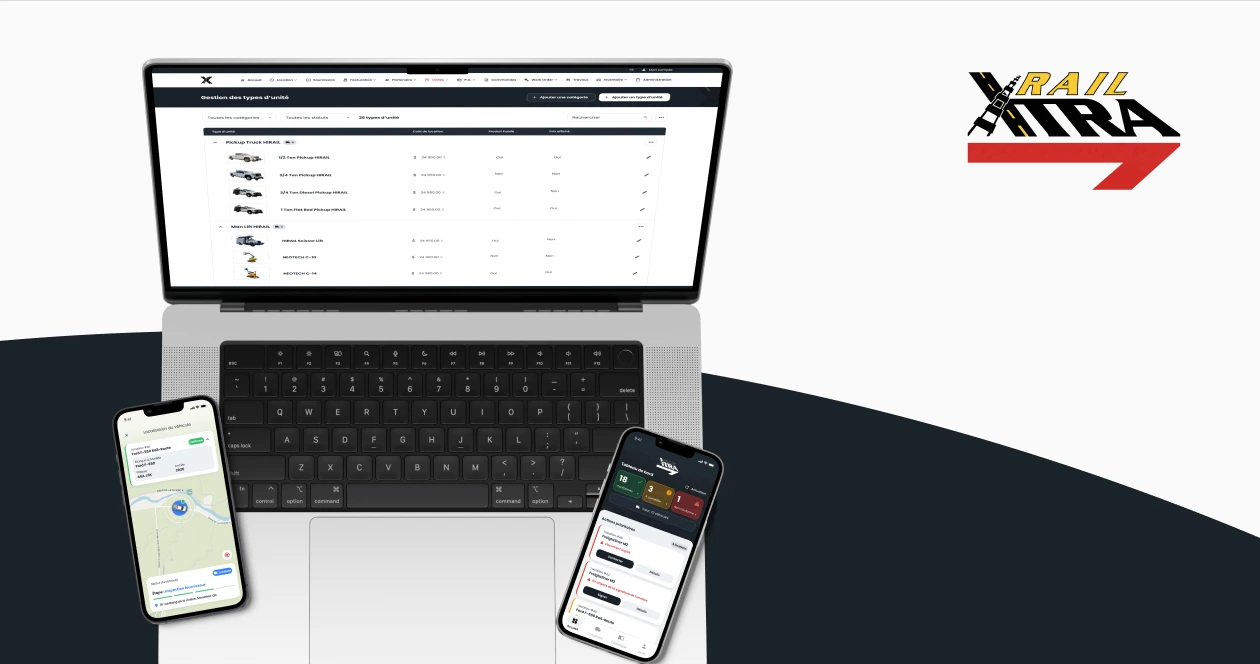
RailXtra
Transportation and rental The challenge: managing every rental end to end, with a management console, mobile apps and AI agents. See the case study →
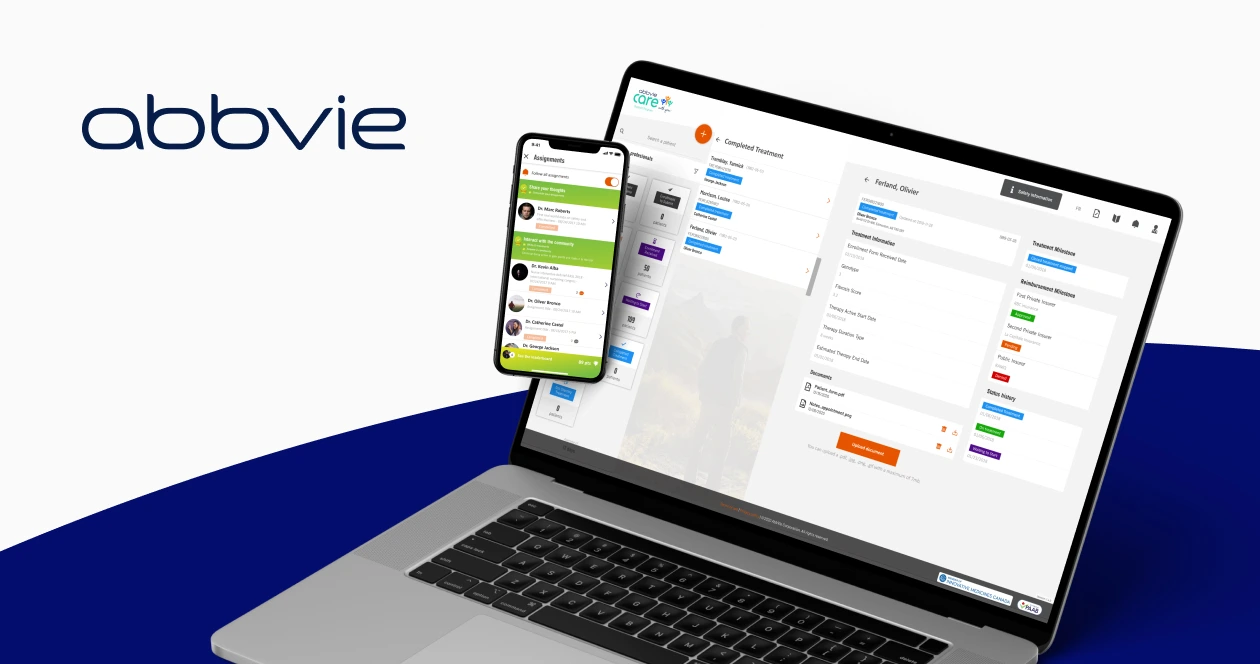
AbbVie
Pharmaceutical The challenge: giving healthcare professionals simple access to the information they need, when they need it. See the case study →
Bluepulse
Education The challenge: giving educational institutions a continuous feedback app that is quick to fill out and easy to analyze. See the case study →

Everyone talks about AI. We implement it.

We develop your full digital potential. A first 30-minute conversation is enough to see where to start.

Let's talk →